

1st Production Run 300 units - Estimated ship date: Sept 1 thru Oct 15
2nd Production Run TBA - Estimated ship date: Dec 1 thru Jan 15
Final timing may vary based on production and demand.
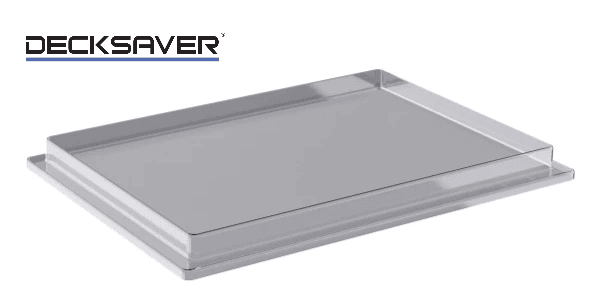
PLUS! Receive 4 free months of the ‘Insider’ tier of SURCO’s Patreon ($100 value) or $100 off any SURCO music production course.
After purchase, simply forward your receipt to eric@SURCOlive.com to redeem your online product credit.

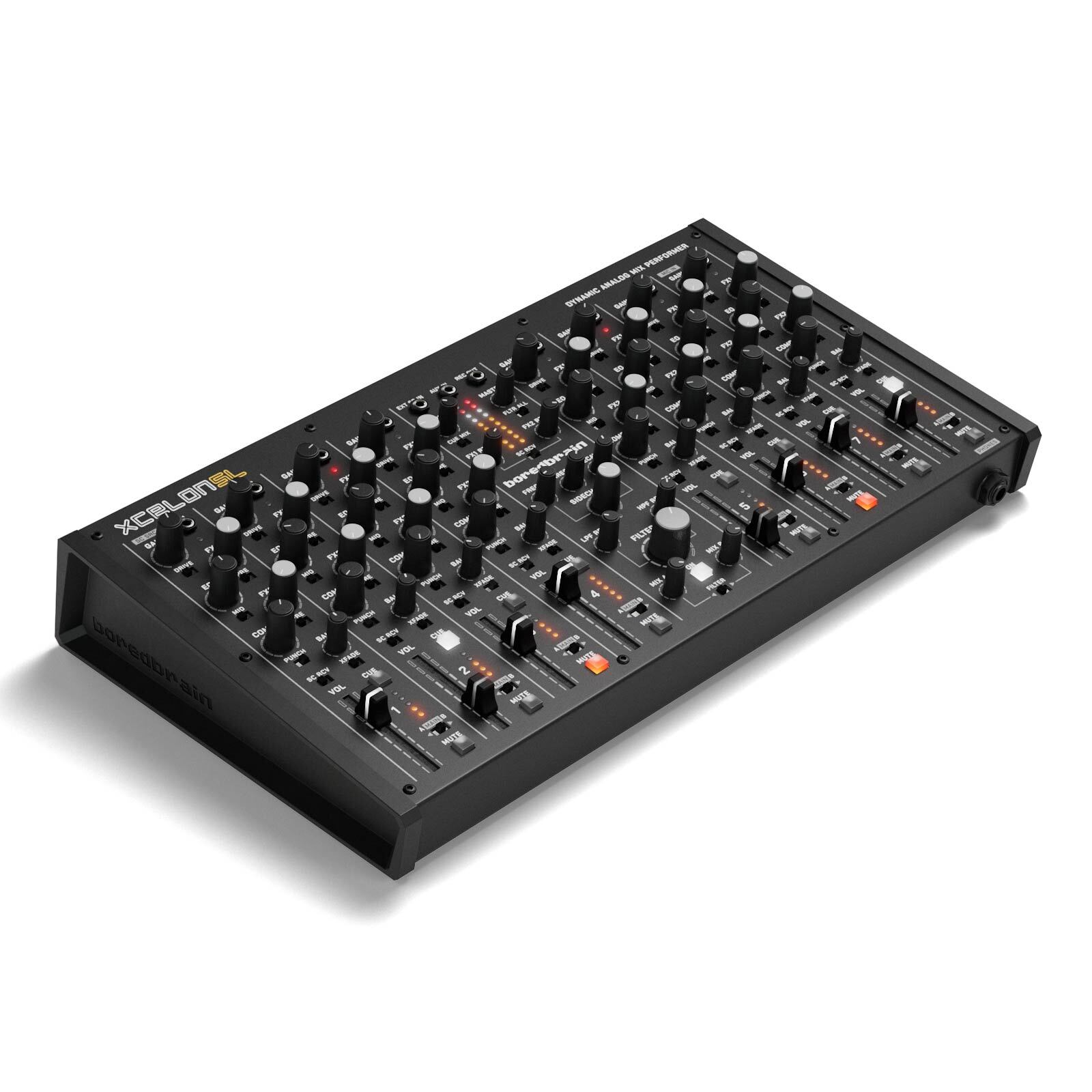
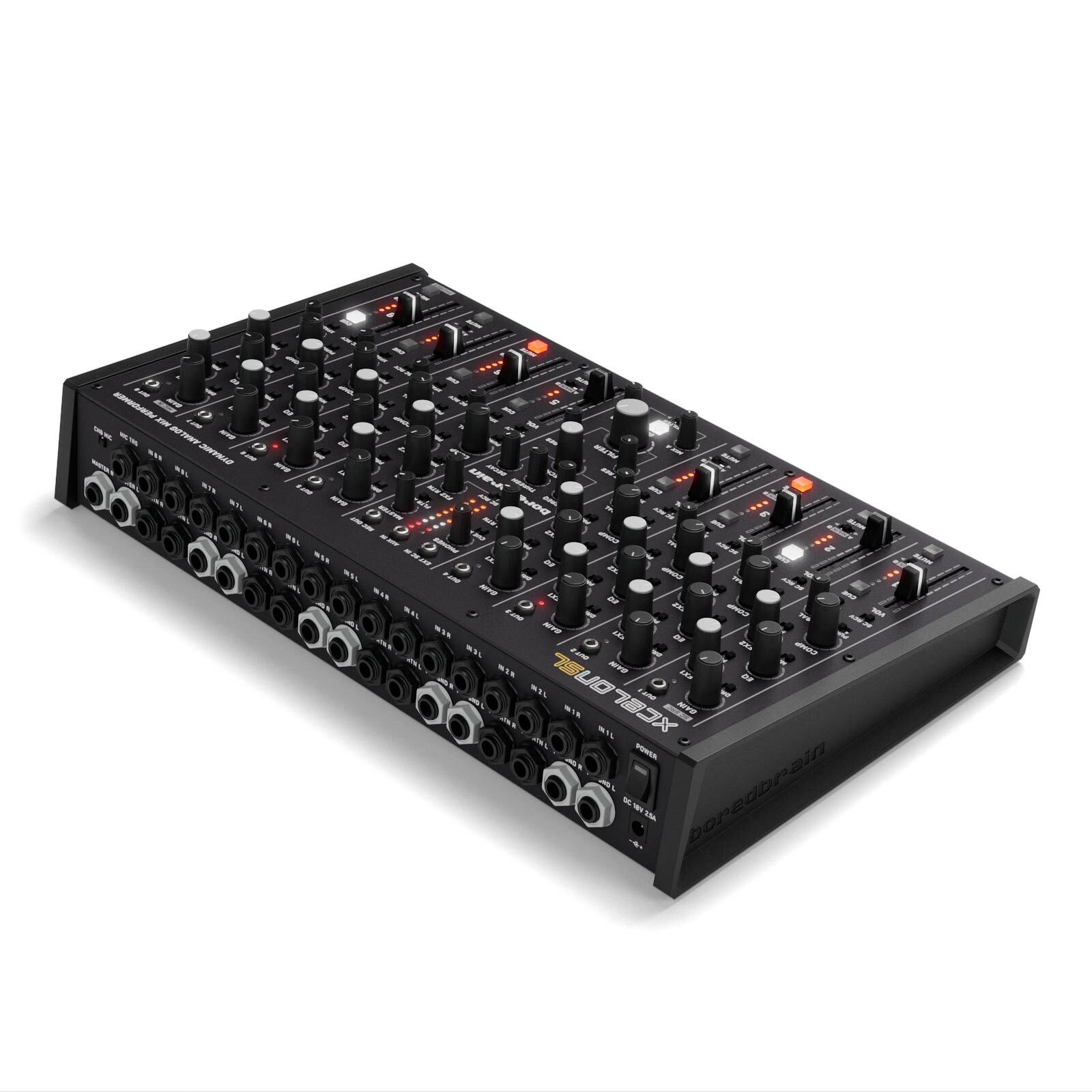
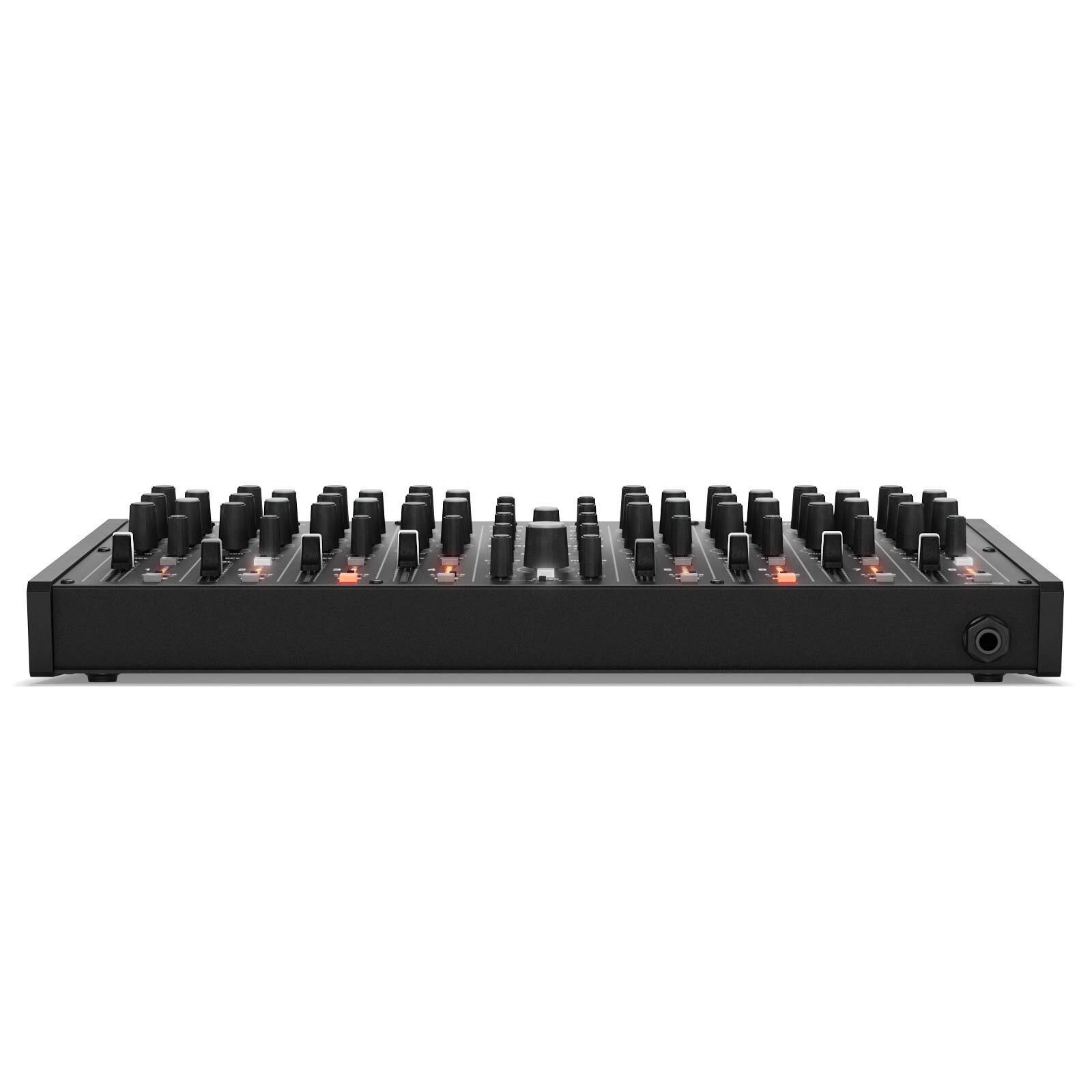
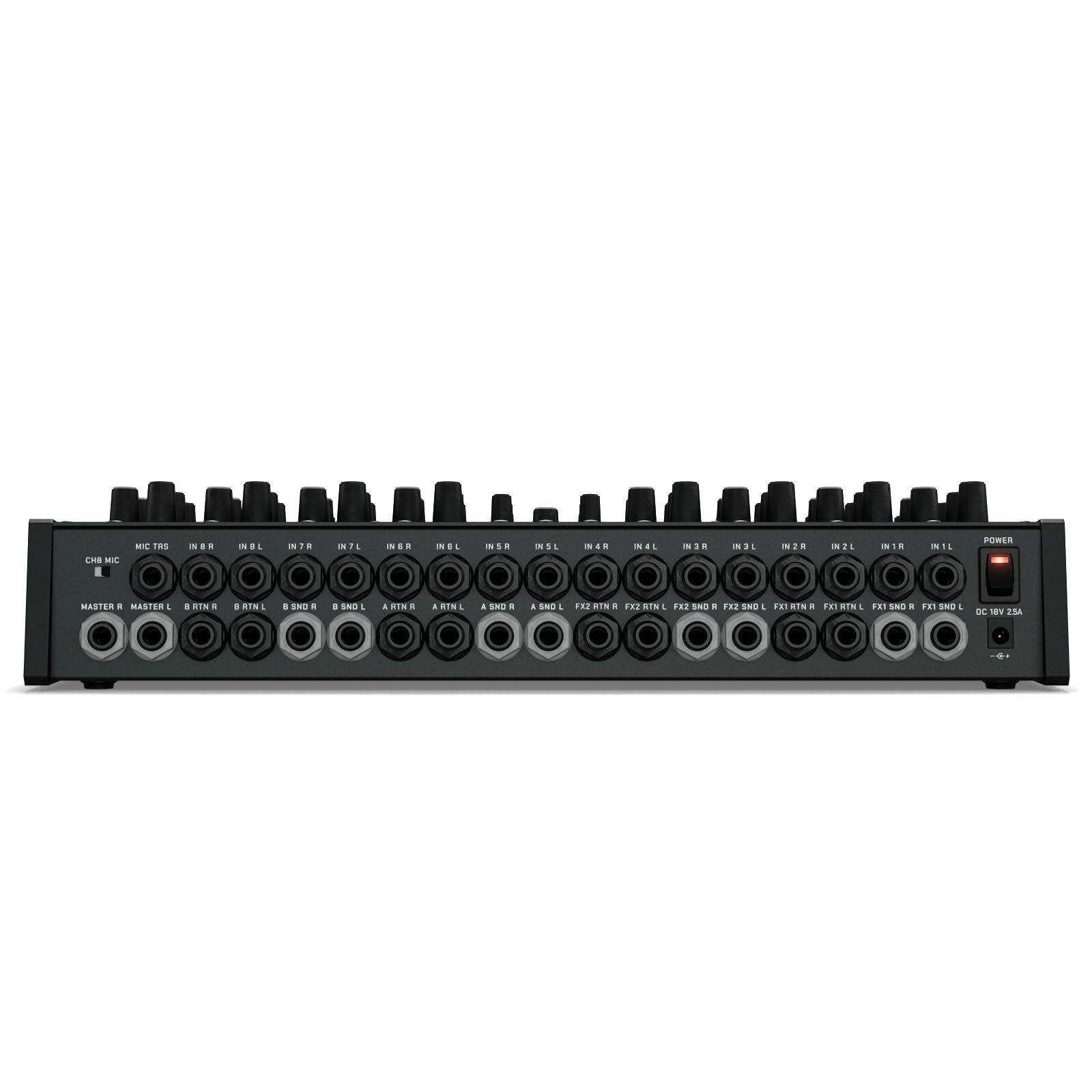
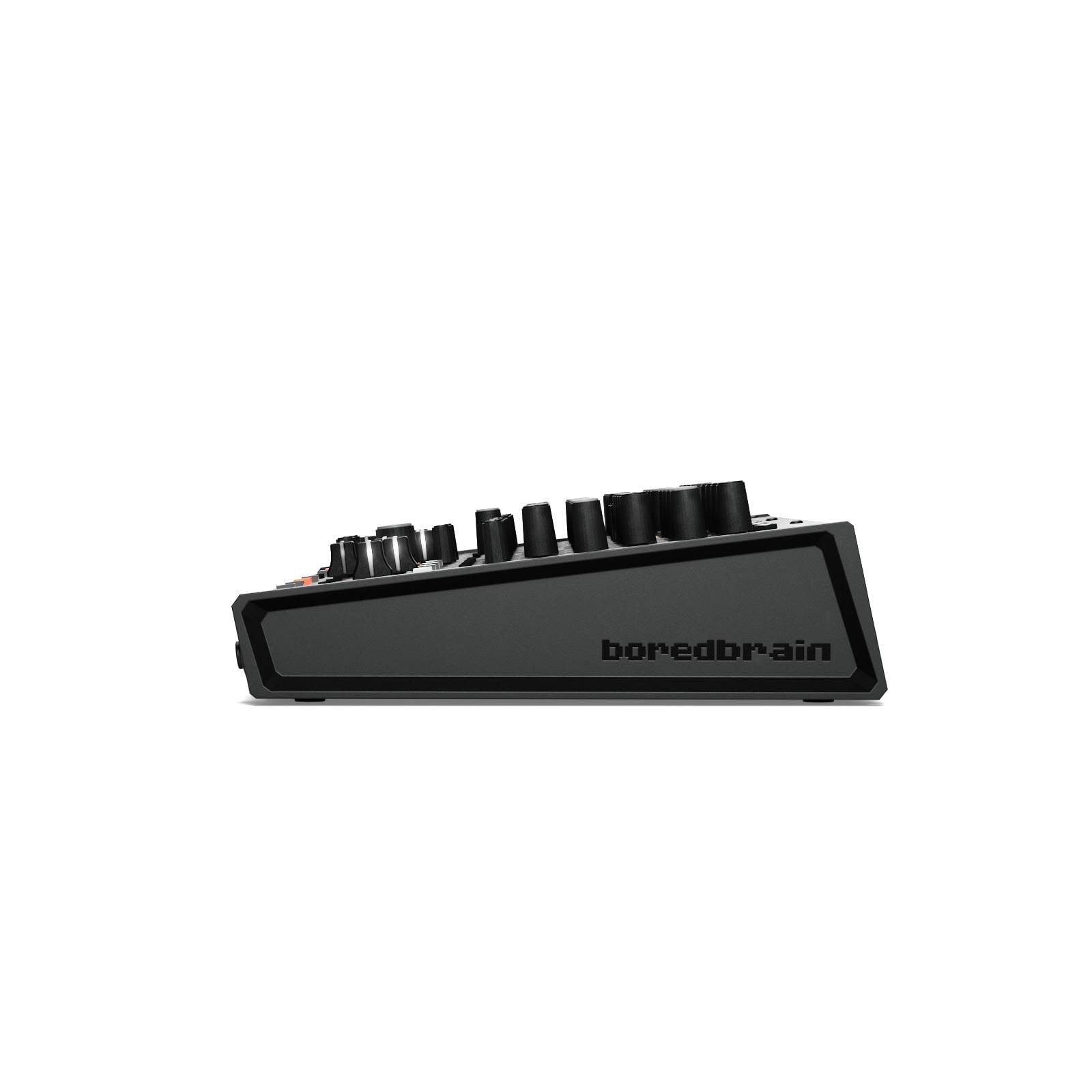

Dual-Mode Channel Controls
GAIN + DRIVE
The pro-quality stereo input handles everything from line-level sources to hot modular signals, with ample headroom throughout. Channel inputs use an unbalanced path optimized for local connections to electronic instruments, with a carefully engineered input stage for exceptionally low noise and reliable performance. A switchable DRIVE mode engages an asymmetrical overdrive circuit, taking the signal from a hint of grit to heavy saturation using the same GAIN control.
EQ + MID
The classic tilt-style EQ allows for tonal adjustment with immediate, musical results—useful for placing sounds within a dense electronic mix. Choice components and tuned circuitry preserve clarity and detail across the frequency range. Enabling MID mode shifts the same control to the midrange to either scoop and make space or boost and add presence.
COMP + PUNCH
The onboard analog VCA compressor shapes transients and smooths dynamics. A single control links threshold and make-up gain so added compression stays mix-ready, steadily increasing average loudness. PUNCH mode changes the attack and release settings to emphasize transients and bring percussive elements forward.
BAL + XFADE
The balance control uses an equal-power pan law for natural-feeling placement across the stereo field, without the center feeling “thin.” XFADE mode reconfigures the channel for dual-mono use: the left and right inputs become two mono sources, and the same control crossfades between them—ideal for blending two machines, two voices, or two layers on one channel.
VOL + SC CV
While other channel controls use rotary knobs, the VCA-based volume control uses a vertical fader for precise, immediate level adjustment during a live mix. The adjacent VU meter shows the signal level relative to other channels. In SC RCV mode, the channel responds to the master sidechain signal, applying ducking directly at the VCA. The illuminated fader reflects the resulting level, visually tracking the effect as it happens.
CUE + OUT
The CUE button activates the channel PFL (pre-fader listen), allowing it to be monitored in headphones before bringing it into the mix. Multiple channels can be routed to the cue bus simultaneously for combined PFL monitoring. Additionally, by plugging into the OUT jack atop each channel, the pre-fader signal can be tapped with a stereo cable (3.5mm) for multi-track recording or other creative uses.
FX1 & FX2 + PRE
Two independent stereo sends route each channel to external effects busses with variable controls. Their gray knobs highlight the FX controls at a glance, inviting continual play—a classic Xcelon touch. Selecting PRE on either send decouples it from the volume fader for full-wash effects, cue-style sends, or other custom routes.
MIX A & MIX B
The output of each channel can be sent to either of two alternate mix busses before ultimately reaching the main bus, allowing for channel grouping, stereo insert effects, and master filter assignment. Using the three-way switch labeled A-MAIN-B, mix bus selection can be made on-the-fly for highly performative routing flexibility.
Analog Performance Filter
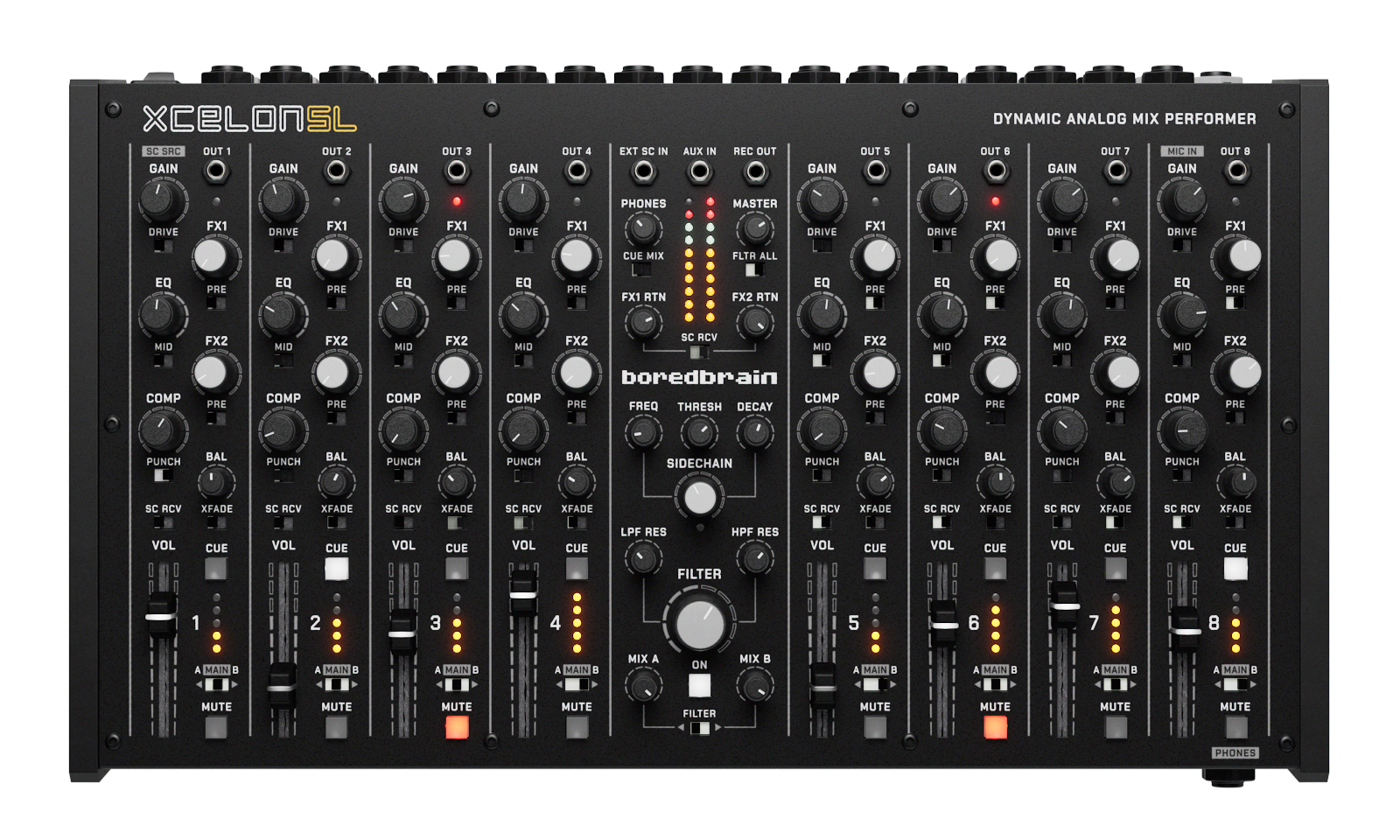
Located at the core of Xcelon SL's panel, the analog performance filter is a prime mixing tool for modern electronic music performances. With its distinctive character and simple control interface, the filter can be used to shape low-end or high-end energy with accuracy and immediacy.
The DJ-style FILTER control continuously sweeps the cutoff across the low-pass and high-pass sides, with a neutral zone between them defined by an easy-to-find center detent. Pressing ON activates or deactivates the filter, regardless of knob position. Separate LPF RES and HPF RES controls provide dedicated resonance “presets” for each mode, so the low-pass and high-pass sides keep their own predictable characters without continual readjustment.
The filter circuit is selectively assignable to either the A or B mix busses using the FILTER switch, or FLTR ALL (directly below the master volume control) can override the assignment and filter the entire mix. This flexibility allows either one channel to be filtered, a group of channels, or everything at once.
Integrated Dynamic Sidechain
Flexible Bus and Effects Routing
Each channel feeds both FX sends, allowing independent control over how much signal is routed to external effects. These are typically used for time-based effects like delays and reverbs, although there are no rules against using them in other ways. Dedicated FX1 RTN and FX2 RTN controls return those signals on stereo paths (normalled L→R for mono compatibility). A shared SC RCV switch makes the returns sidechain-responsive, essential for longer decays to follow the groove instead of building up across the mix.
Master and Monitor Essentials
The master section is built for real-world output levels, with balanced outputs and headroom up to +25 dBu for professional connection to studio interfaces and live systems alike. MASTER controls the output level, while dual 10-segment meters provide clear level reference on the master bus.
For monitoring, the headphone circuit is designed to drive a wide range of headphones with the detail and power needed for both studio and live use. PHONES controls the level at the front-panel headphone jack, and the CUE MIX switch lets you monitor the cue mix instead of the main mix to check signals before bringing them in.
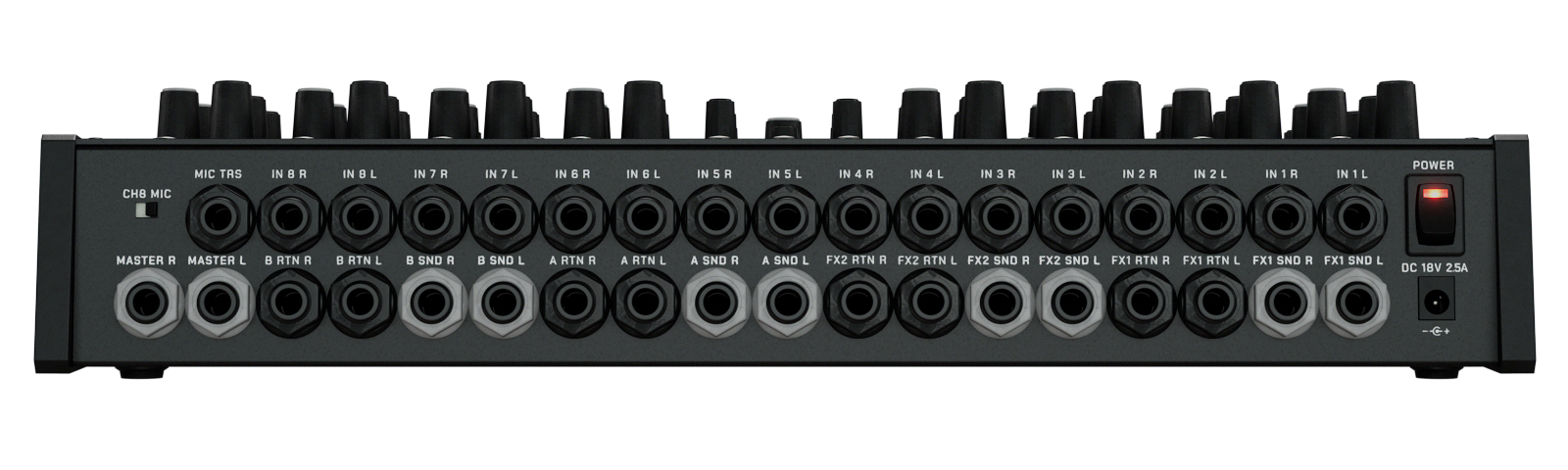
Using the rear CH8 MIC switch, a dedicated dynamic microphone input can be routed to Channel 8, with access to the same processing and routing as any other source—EQ, compression, FX sends, sidechain response, and the performance filter when assigned. In XFADE mode, the microphone can share the channel and be crossfaded with a separate mono line input plugged into the right input.
AUX IN
AUX IN brings any stereo line-level source directly into the main mix—useful for a backup audio feed, direct DAW output, or daisy-chaining another mixer—and can even be routed through the performance filter when FLTR ALL is enabled.
REC OUT
REC OUT provides a consistent line-level stereo recording output via 3.5mm, unaffected by the MASTER level, for convenient connection to mobile recorders and interfaces. The output is attenuated by 10 dB to prevent overload of portable devices.
METERS PRE/POST
The CHANNEL METERS switch, accessed internally by removing the right side panel, lets channel metering run post-fader (default) for true mix-relative levels, or pre-fader for DJ-style signal visibility before bringing sources into the mix.

In the mix with Surco (Eric Turner)
Almost two years ago, I met Adam at Knobcon. He asked what I thought was missing from the market, and I said, “a high-quality, portable performance mixer designed for live electronic music.” He smiled and said, “that’s interesting—I’ve been working on exactly that. We should talk.”
That turned into a new friendship and regular calls, bouncing ideas around features, implementation, and what performers actually need. It’s been a pleasure working with a team that not only obsesses over product quality, but also—being live performers themselves—obsesses over how it will be used.
The result is the Xcelon SL, and I’m proud to have played a small part in it. It has everything I reach for, and nothing I don’t. It’s become central to my live sets across a wide range of setups—modular, hardware synths, samplers, grooveboxes, vintage gear, drum machines, and effects. The way it all comes together in a device that’s this playable and sounds this good just feels right. I keep finding myself wondering where this mixer has been all my life.
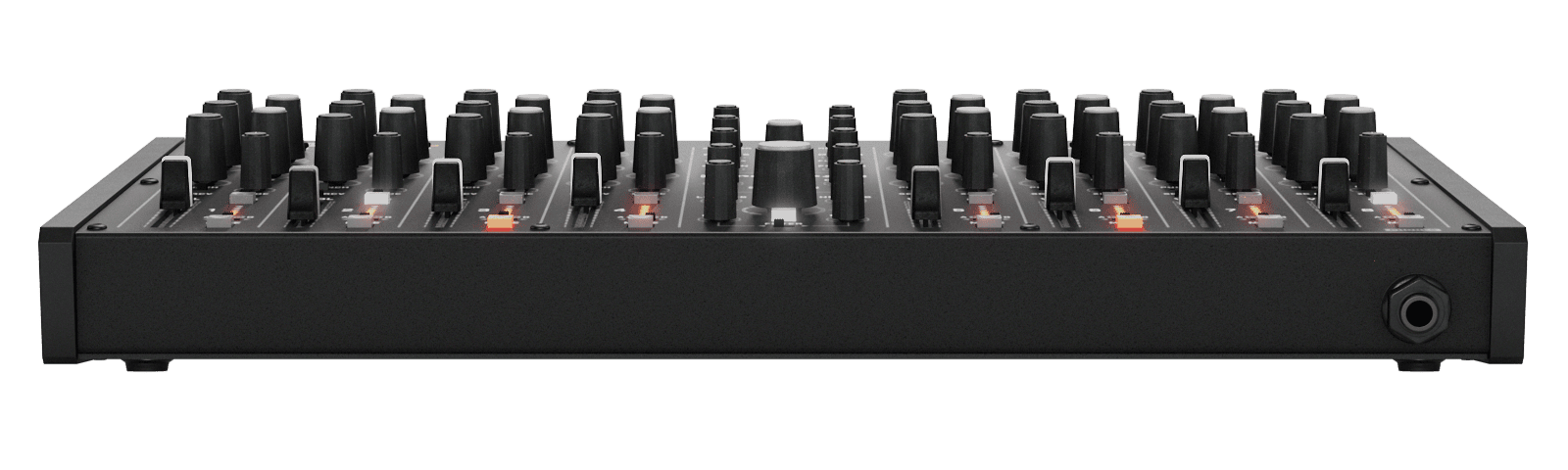
SPECIFICATIONS
- Max Output Level: +25 dBu, balanced
- Mix Bus Headroom: 21 dB above +4 dBu nominal
- Single-Channel SNR: 100 dB(A), +4 dBu reference level
- All-Channels SNR: 94 dB(A), +4 dBu reference level
- Output Noise: −89 dBu(A), all channels muted, 20 Hz–20 kHz
- Mix Noise: −81 dBu(A), all channels open, levels at max, 20 Hz–20 kHz
- Input Impedance: 68 kΩ
- Length: 14.7 in (373 mm)
- Width: 8.5 in (216 mm)
- Height: 2.8 in (71 mm)
- Weight: 4 lbs 14 oz (2.21 kg)
- Power: DC 18V 2.5A (1.75A typical)